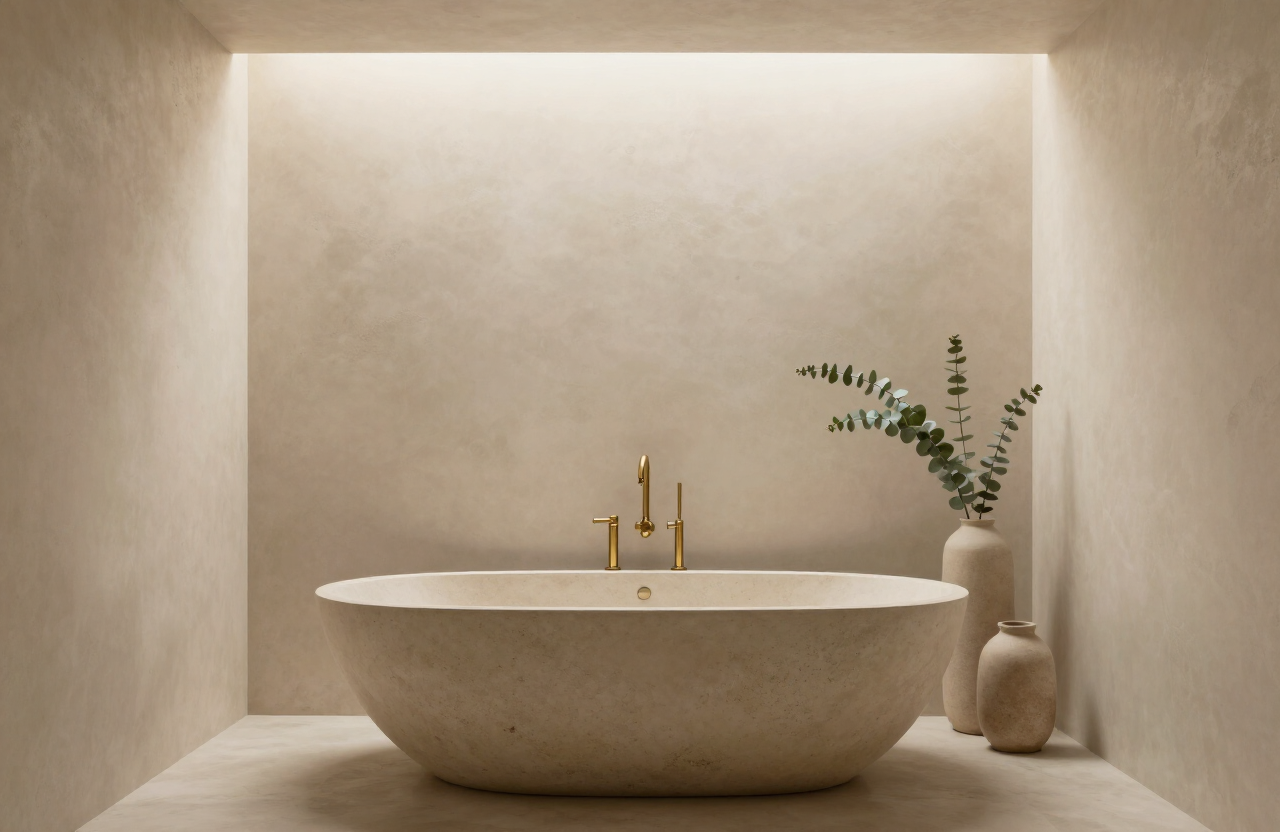
The spa bathroom is the most requested brief in residential design, and the most misunderstood. It is not about rainfall showers or imported stone. Study any great hotel spa and you will find the same three moves: a limited material palette, light that never comes from directly overhead, and storage that hides the evidence of daily life.
Two materials, three tones
Choose one stone or tile and one metal, then stop. A bathroom in warm microcement with brushed brass feels twice as expensive as one mixing marble, chrome, black fixtures, and patterned tile. If the room is small, run the same material across floor and walls — the continuity erases boundaries and visually doubles the space.
A spa bathroom is three moves: a limited palette, light at human height, and storage that hides the evidence.
Ritual is a design feature
A wooden stool beside the tub, a tray for a book and a glass, eucalyptus hung where the steam will release it — these are not accessories but invitations. Design the ritual and the relaxation follows.
The finishing details are unglamorous but decisive: a dimmer on the vanity circuit, a heated towel rail, and a deep medicine cabinet so the counter can stay nearly empty. Serenity, it turns out, is mostly storage.