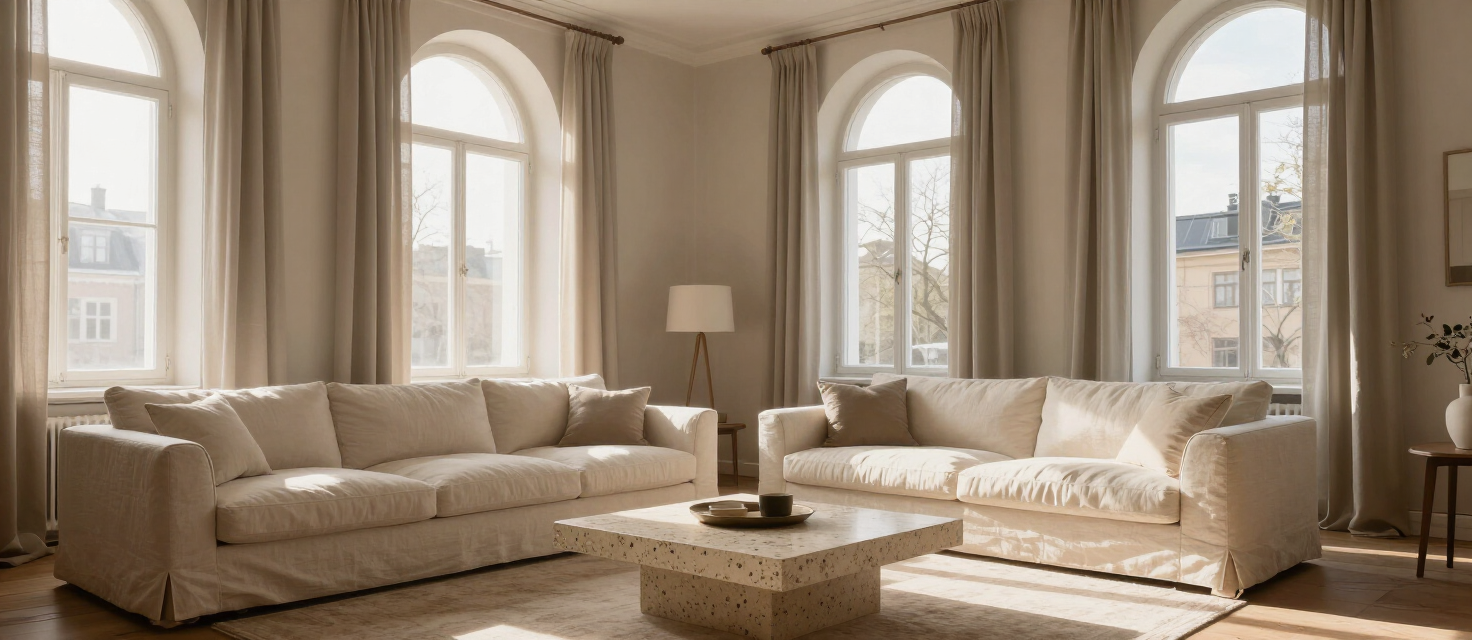
For a decade, minimalism meant white walls, sharp edges, and a certain emotional chill. The rooms photographed beautifully and lived poorly. What has replaced it — quietly, then all at once — is a warmer reading of restraint: fewer things, yes, but softer ones. Plaster instead of paint. Linen instead of leather. Light that moves across a wall like weather.
Warm minimalism is not a style so much as an editing philosophy. You keep the discipline of less, but every object that survives the edit has to earn its place twice — once for function, once for feeling.
Start with the envelope
The biggest shift happens before a single piece of furniture enters the room. Walls in ivory, bone, or pale clay — with a matte, mineral finish — change the quality of light itself. A limewash or plaster wall absorbs glare and returns a glow, which is why these rooms photograph like morning even at noon.
Floors follow the same logic: wide-plank oak with a natural oil finish, or large-format stone with a honed rather than polished surface. Shine reads as effort; matte reads as calm.
Keep the discipline of less — but let every surviving object earn its place twice: once for function, once for feeling.
Choose fewer, better textures
In a restrained room, texture does the work that pattern used to do. A nubby bouclé chair, a travertine table with visible pitting, a wool throw with a visible weave — these are the ornaments of warm minimalism. Aim for three to four distinct textures per room, repeated rather than multiplied.
The mistake to avoid is buying the aesthetic all at once. Warm minimalism rewards patience: a room assembled slowly, from pieces you would keep through three moves, always looks more expensive than one delivered in a single truck.
Begin with the envelope, add one sculptural seat, one honest table, one lamp that glows rather than glares — then stop. The room will tell you what, if anything, it still needs.