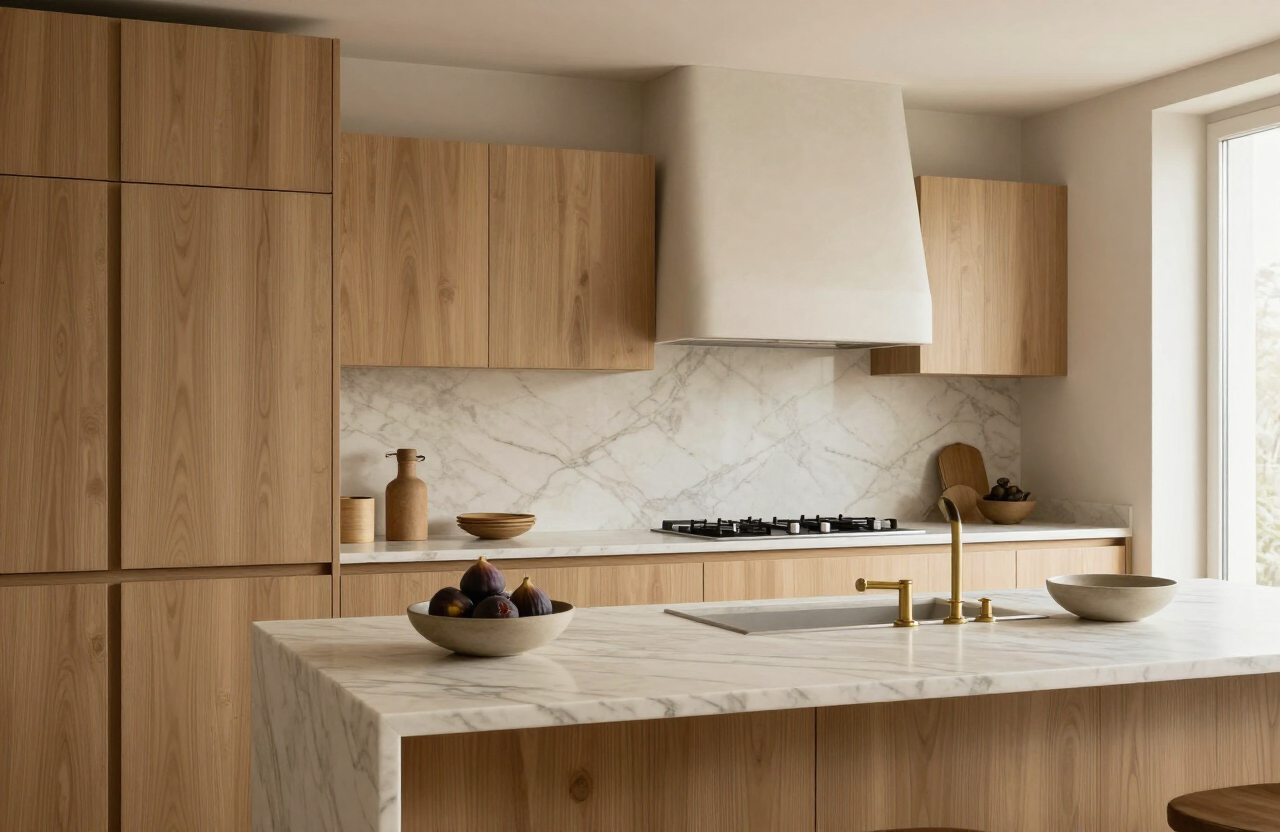
There are two philosophies of kitchen design: materials that resist time, and materials that record it. The most compelling kitchens of the moment choose the second — honed marble that etches where the lemon sat, unlacquered brass that darkens where hands touch, oak that mellows from pale honey to amber.
The honest-materials palette
A warm kitchen needs only four ingredients: a stone with movement (marble, quartzite, or travertine), a wood with visible grain, a metal allowed to patina, and a plaster or limewash surface somewhere vertical. Everything else — appliances, hardware, lighting — should serve these four quietly.
Honed finishes matter more than species. A polished surface reflects the room and shows every fingerprint; a honed one absorbs light and forgives daily life. If you cook often, choose forgiveness.
The most beautiful kitchens are built from materials that age in public.
Layout before finishes
No slab of marble can rescue a bad layout. Before choosing a single finish, map the triangle between sink, stove, and refrigerator, and protect a landing zone beside each. The island should be sized to the room, not the aspiration — 90 centimeters of clearance on every working side is the difference between generous and cramped.
Finally, style the kitchen like a room, not a laboratory: a bowl of fruit that you actually eat, a wooden board leaning against the backsplash, one branch in a heavy vase. The goal is a kitchen that looks inhabited by someone who loves to cook — because it is.