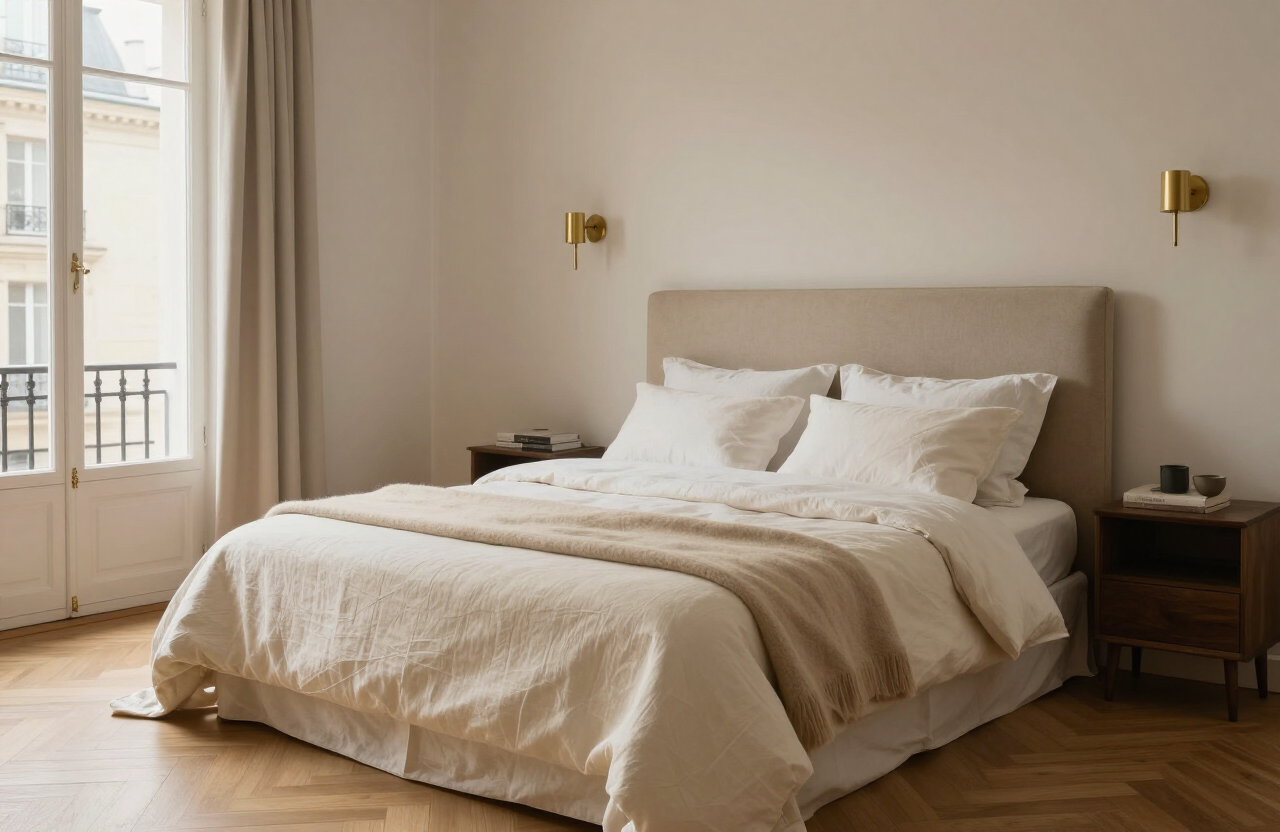
We ask more of bedrooms than of any other room: they must energize us at 7 a.m. and sedate us by 11 p.m. The ones that succeed are rarely the most decorated. They are the most considered — designed backwards from the feeling of falling asleep easily.
The bed is the architecture
An upholstered headboard in oatmeal or flax linen does two things at once: it softens the room acoustically and gives the bed the visual weight of a fireplace. Center it, flank it, and resist the urge to push the bed into a corner unless the room truly demands it.
Bedding should be layered in threes — a percale or linen sheet set, a duvet in a tone one shade deeper, and a single throw folded across the foot. More than three layers reads as styling; fewer reads as unfinished.
A bedroom should be designed backwards from the feeling of falling asleep easily.
Light in layers, never from above
Overhead lighting is the enemy of a restful bedroom. Two wall sconces or low table lamps with warm bulbs — 2700K or lower — create pools of light at human height. Add dimmers wherever possible; the ability to lower a room to candle-brightness is the single cheapest luxury in interior design.
Finish with the senses: blackout-lined curtains in a heavy natural fabric, a rug that your feet meet first, and nothing on the nightstand that glows, buzzes, or asks for your attention.